Industry knowledge
How to Define Tolerance Requirements for Non-standard Precision Screws
For Non-standard Precision Screws, tolerance definition should not stop at thread diameter alone. Buyers usually need to confirm the relationship between head height, thread length, shank diameter, drive depth, tip shape, and assembly clearance. A small deviation in one dimension may affect torque transfer, locking performance, or final product appearance.
A practical approach is to divide dimensions into functional and non-functional areas. Functional dimensions directly affect assembly, load, sealing, electrical contact, or positioning. Non-functional dimensions mainly affect appearance or handling. Functional dimensions should receive tighter control, while non-functional dimensions can often use more economical tolerances.
Common tolerance points buyers should clarify
- Thread major diameter, minor diameter, pitch diameter, and thread length.
- Head diameter, head thickness, countersunk angle, and bearing surface flatness.
- Drive depth and drive concentricity, especially for micro screws.
- Tip type, such as flat point, cone point, dog point, or customized guiding end.
- Surface coating thickness, because coating can change final thread fit.
In our customization work, we often recommend confirming the assembly sample or mating part together with the screw drawing. This helps us judge whether a tolerance is truly necessary or whether it can be optimized for cost and production stability.
Material Selection Should Match Load, Size, and Environment
Material selection for Precision Screws should be based on actual service conditions rather than only price or appearance. Miniature screws, thin-head screws, and long slender screws may behave very differently even when made from the same material. Buyers should consider tensile strength, hardness, corrosion resistance, magnetic properties, and post-treatment compatibility.
Material selection reference for customized precision screw applications
| Material Type |
Typical Advantage |
Buyer Attention Point |
| Carbon Steel |
Good strength and economical production |
Usually needs plating or anti-rust treatment |
| Stainless Steel |
Better corrosion resistance |
Strength grade and anti-galling performance should be checked |
| Copper or Brass |
Good conductivity and decorative appearance |
Lower strength than steel materials |
| Alloy Steel |
Suitable for higher strength requirements |
Heat treatment control is important |
For very small screws, material stability is especially important because the screw may have limited thread engagement and a small drive area. The smaller the screw, the more important material consistency and process control become. With our experience in miniature screw production, including screws with an external diameter as small as 0.6 mm, we pay close attention to material behavior during forming, threading, and inspection.
Anti-loosening Design Is More Than Adding Glue
Anti-loosening performance depends on vibration level, tightening torque, thread engagement length, material pairing, and whether the assembly will be serviced repeatedly. Thread adhesive is only one option. In some assemblies, mechanical structure, nylon patch, special thread shape, or precise torque control may be more suitable.
Practical anti-loosening options
- Nylon patch or thread-locking coating for vibration resistance.
- Serrated bearing surface to increase resistance under the screw head.
- Pre-applied adhesive for more consistent assembly than manual dispensing.
- Special thread profile for controlled friction and better retention.
- Washer combination when surface protection or load distribution is required.
When buyers provide vibration conditions, tightening method, mating material, and service temperature, the anti-loosening solution can be selected more accurately. Our factory is equipped with anti-loosing processing capability, so we can help match the screw structure and locking method instead of treating them as separate decisions.
Inspection Planning for Customized Screw Orders
For customized screw orders, inspection should be planned before mass production. A good inspection plan defines what must be measured, how it is measured, and how often it is checked. This is especially important for non-standard screws because the drawing may include features that ordinary standard screw gauges cannot fully verify.
Recommended inspection focus
- Confirm thread fit with standard gauges or customized gauges when needed.
- Measure key dimensions with optical equipment, projectors, calipers, or micrometers according to accuracy needs.
- Check drive shape and depth to reduce slipping during automatic or manual assembly.
- Inspect coating appearance, thickness, salt spray requirements, and color consistency when surface treatment is specified.
- Control burrs, sharp edges, and foreign matter for electronics, medical device components, and precision instruments.
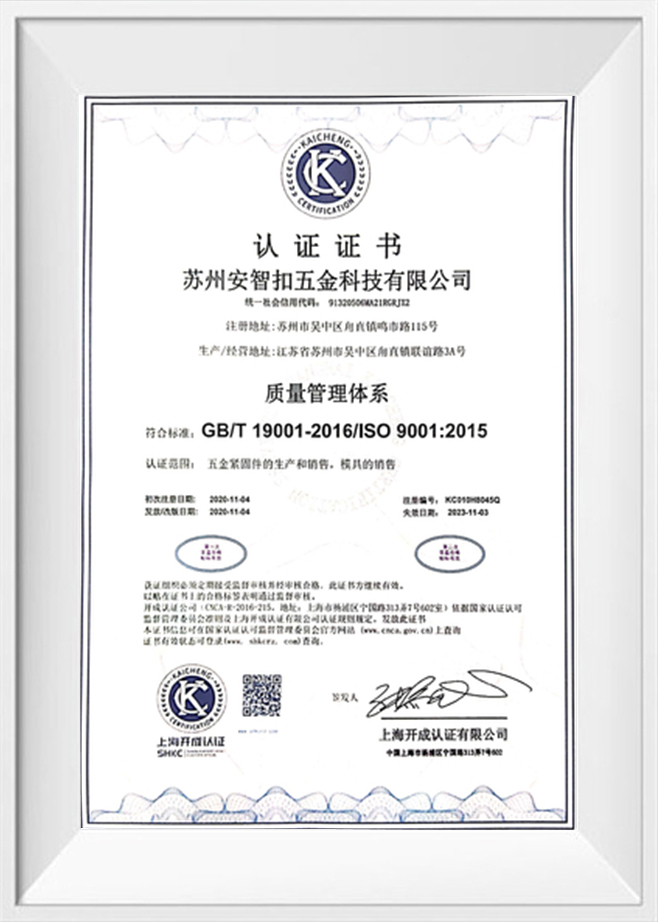
Inspection standards should be linked to the real assembly risk, not only to the drawing format. For example, a slight visual mark may be acceptable on a hidden internal screw, but unacceptable on a visible decorative screw. With ISO9001:2015 quality system certification and a complete range of testing equipment, we support buyers in setting practical inspection points for stable batch delivery.

.jpg "Mesin cuci shim baja pabrik Cina mesin cuci spacer baja")
.jpg "Mesin Cuci Tembaga Mesin Cuci Shim Mesin Cuci Datar")
.jpg "Din125 Mesin cuci datar nilon plastik")
.jpg "DIN471 cincin penahan ring penahan mesin cuci")
.jpg "Lingkaran mesin cuci pegas Din472")
.jpg "Mesin Cuci Fender JDM M6 Aluminium Gradasi Dengan Kit Baut")
.jpg "Mesin cuci datar bulat kuningan berkualitas tinggi")
.jpg "Mesin cuci polos baja tahan karat ISO7091 304")
.jpg "Mesin cuci sepatbor M6 JDM")
.jpg "Mesin cuci countersunk Aluminium OEM untuk motor")
.jpg "Gasket Mesin Cuci Datar Pasifasi Cuci Stainless Steel Khusus")
.jpg "Mesin Cuci Datar SS316 DIN125A M6")